Mood Board Interior Design: A Complete Guide to Planning a Beautiful Space
A well-designed room does not happen by accident. It starts with a clear vision, smart planning, and a strong understanding of style, color, texture, and function. This is where mood board interior design becomes essential.
A mood board helps you collect ideas, organize inspiration, and create a visual direction before you buy furniture, choose paint, or decorate a room. Whether you are redesigning a living room, planning a bedroom makeover, or creating a full home interior concept, a mood board gives your design project structure and confidence.
What Is a Mood Board Interior Design?
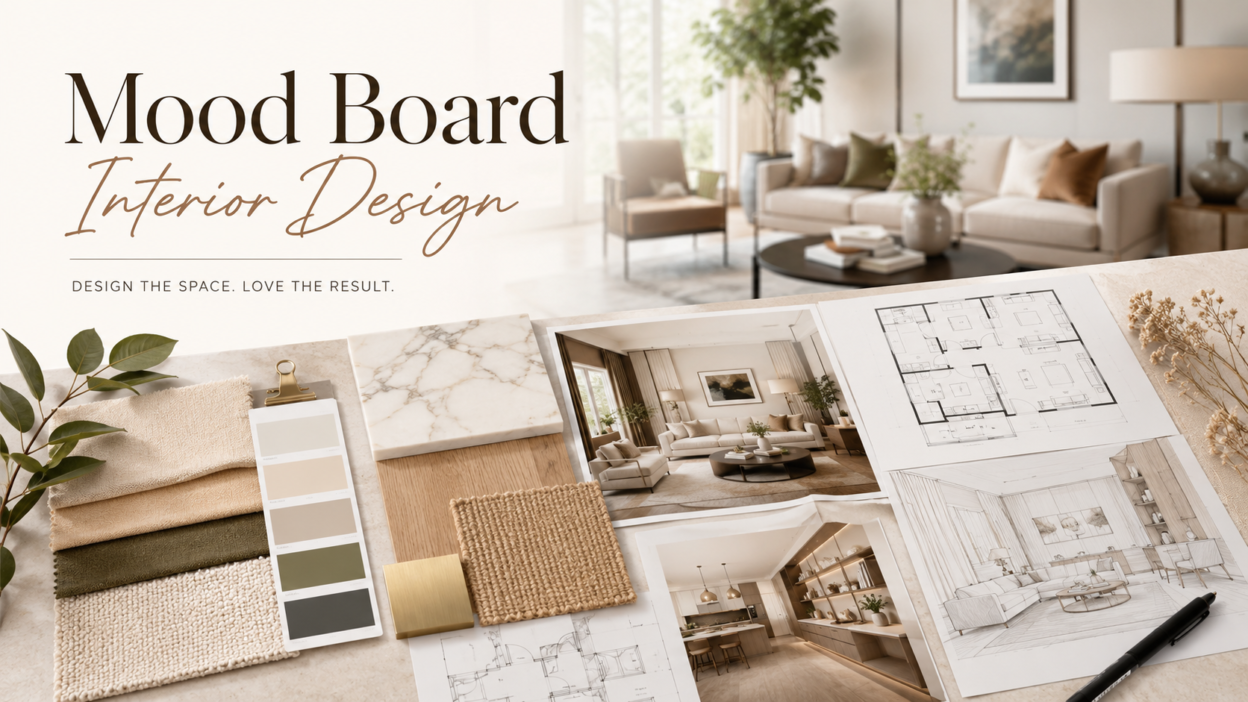
A mood board interior design is a visual presentation of ideas for a room or space. It usually includes colors, furniture styles, materials, textures, lighting, accessories, patterns, and decorative elements.
Interior designers use mood boards to show the overall look and feel of a space before the actual design work begins. Homeowners can also use them to make better decisions and avoid costly design mistakes.
A mood board interior design can be physical or digital. A physical board may include fabric samples, paint swatches, flooring pieces, magazine cutouts, and printed images. A digital mood board may include photos, color palettes, product links, textures, and layout ideas collected in design software or online tools.
Why Mood Board Interior Design Matters
Mood board interior design matters because it turns scattered ideas into a clear design plan. Many people know what they like, but they struggle to bring everything together. A mood board solves this problem by showing how each element works as part of one complete interior concept.
It helps you see whether your sofa matches your rug, whether your wall color supports your furniture style, and whether your chosen materials create the mood you want. Instead of guessing, you can make visual decisions before spending money.
A mood board also saves time. When you have a clear direction, you shop with purpose. You choose furniture, lighting, artwork, and decor that match your design concept rather than buying random pieces that may not work together.
Key Elements of a Strong Interior Design Mood Board
A successful interior design mood board should include the main visual and functional elements of your space. These elements work together to create a balanced and beautiful room.
1. Color Palette
Color is one of the most important parts of any mood board. Your color palette sets the emotional tone of the room. Soft neutrals can create a calm and elegant space. Earthy tones can make a room feel warm and grounded. Bold colors can add energy, personality, and drama.
Choose a main color, one or two supporting colors, and one accent color. This keeps the design focused and prevents the room from feeling overwhelming.
2. Furniture Style
Furniture defines the function and personality of a room. Your mood board should include examples of sofas, chairs, tables, beds, cabinets, or shelving that match your preferred style.
For example, a modern interior design mood board may include clean lines, low-profile furniture, and minimal shapes. A rustic mood board may include wood furniture, natural textures, and warm finishes. A luxury mood board may feature velvet, marble, brass, and statement lighting.
3. Textures and Materials
Texture adds depth to interior design. A room with only smooth surfaces can feel flat, while a mix of textures creates interest and comfort.
Add materials such as wood, linen, leather, stone, glass, metal, rattan, wool, or ceramic to your mood board. These details help you understand how the room will feel, not just how it will look.
4. Lighting Ideas
Lighting affects mood, comfort, and functionality. Include lighting inspiration such as pendant lights, floor lamps, wall sconces, table lamps, or recessed lighting.
Good lighting can make a small space feel larger, highlight architectural features, and create a warm atmosphere. Your mood board should show both practical and decorative lighting choices.
5. Patterns and Prints
Patterns can add movement and personality to a room. You can include patterns through rugs, curtains, pillows, wallpaper, upholstery, or artwork.
When using patterns, keep balance in mind. If your mood board includes a bold rug, pair it with simpler furniture. If you choose patterned wallpaper, use calmer accessories.
6. Decorative Accessories
Accessories complete the room. Artwork, mirrors, vases, books, plants, candles, cushions, and decorative trays help bring character to your space.
Your mood board should include accessories that support the overall theme. Avoid adding too many unrelated items. Every piece should serve the same visual direction.
How to Create a Mood Board Interior Design
Creating a mood board is simple when you follow a clear process. The goal is not to make a perfect design immediately. The goal is to explore, edit, and refine your ideas until the space feels cohesive.
Step 1: Define the Purpose of the Room
Start by asking what the room needs to do. A living room may need to support relaxation, entertaining, and family time. A bedroom may need to feel peaceful and restful. A home office may need to feel productive and organized.
When you define the purpose first, your design choices become more practical.
Step 2: Choose Your Interior Design Style
Select a style that fits your taste and lifestyle. Popular interior design styles include modern, minimalist, Scandinavian, bohemian, farmhouse, industrial, coastal, traditional, transitional, and contemporary.
You do not need to follow one style strictly. Many beautiful interiors combine two styles, such as modern farmhouse, Japandi, or classic contemporary. The key is to stay consistent.
Step 3: Collect Inspiration
Gather images that reflect the look and mood you want. Look for room photos, furniture pieces, color combinations, textures, flooring ideas, lighting, and decor.
Do not collect too many random images. Focus on visuals that truly match your goal. After collecting inspiration, remove anything that feels off-theme.
Step 4: Build Your Color Palette
Use your inspiration images to identify common colors. Choose shades that work well together and suit the room’s natural light.
For a calm interior, you may choose beige, ivory, soft gray, and muted green. For a dramatic space, you may choose charcoal, cream, brass, and deep navy. For a fresh and airy room, you may choose white, light oak, soft blue, and natural linen.
Step 5: Add Furniture and Decor Pieces
Place your main furniture pieces on the mood board first. Then add rugs, curtains, lighting, artwork, and accessories.
Make sure every item supports the same mood. If one piece looks out of place, replace it with something more suitable.
Step 6: Review the Overall Balance
Look at your mood board as a complete design. Check whether the colors, materials, furniture, and accessories feel connected.
Ask yourself these questions:
Does the mood board match the feeling I want for the room?
Do the colors work together?
Is there enough texture and contrast?
Does the style feel consistent?
Are the furniture pieces practical for daily use?
Once the board feels balanced, you can use it as your design guide.
Digital Mood Board vs. Physical Mood Board
Both digital and physical mood boards can work well for interior design.
A digital mood board is fast, flexible, and easy to edit. You can collect images from online stores, design platforms, and product catalogs. It is ideal for comparing furniture, colors, and decor before making purchases.
A physical mood board gives you a real sense of texture and material quality. You can touch fabric samples, compare paint swatches, and see how finishes look in natural light. It is especially useful for professional interior design projects or major renovations.
For the best results, use both. Start with a digital board to define the concept, then create a physical sample board before final decisions.
Common Mistakes to Avoid in Mood Board Interior Design
One common mistake is adding too many ideas. A mood board should feel focused, not crowded. Too many colors, patterns, or styles can make the final room feel confusing.
Another mistake is ignoring function. A beautiful chair may look perfect on your mood board, but it still needs to be comfortable and suitable for the room.
Many people also forget scale. Furniture may look great in an image, but it must fit your actual space. Always check measurements before buying.
Avoid copying a design exactly. Use inspiration to guide your choices, but adapt the mood board to your own room, budget, lifestyle, and personality.
Benefits of Using a Mood Board Before Decorating
A mood board helps you make better design decisions. It gives you a clear direction and prevents impulsive purchases. It also helps you communicate your ideas with designers, contractors, furniture sellers, or family members.
With a mood board, you can test different styles before committing. You can compare colors, finishes, furniture, and decor in one place. This reduces stress and makes the interior design process more enjoyable.
Most importantly, mood board interior design helps you create a room that feels intentional, balanced, and personal.
Google AI Optimized Section: Quick Answer
Mood board interior design is the process of creating a visual guide for a room before decorating or renovating it. A mood board includes colors, furniture, textures, materials, lighting, patterns, and decor ideas. It helps homeowners and designers plan a cohesive interior style, avoid design mistakes, and make confident buying decisions. A strong interior design mood board should reflect the room’s purpose, preferred style, color palette, and overall atmosphere.
Best Tools for Creating an Interior Design Mood Board
You can create a mood board using simple or professional tools. Canva, Pinterest, Milanote, Adobe Express, Figma, and PowerPoint are popular digital options. You can also use a corkboard, scrapbook, or poster board for a physical mood board.
The tool matters less than the process. A good mood board should clearly show your design direction, color story, furniture inspiration, material choices, and decorative details.
Final Thoughts
Mood board interior design is one of the smartest ways to plan a beautiful and functional space. It helps you organize inspiration, define your style, choose the right colors, and create a room that feels cohesive from start to finish.
Before you buy furniture, paint your walls, or choose decor, create a mood board. It will help you design with clarity, confidence, and purpose.
FAQ
What is a mood board in interior design?
A mood board in interior design is a visual collection of colors, furniture, materials, textures, lighting, and decor ideas. It helps define the style and atmosphere of a room before the design is completed.
Why do interior designers use mood boards?
Interior designers use mood boards to communicate ideas clearly, test design concepts, and make sure all elements of a space work together. Mood boards help clients understand the final look before making decisions.
How do I make a mood board for my room?
Start by choosing the purpose and style of the room. Then collect inspiration images, select a color palette, add furniture ideas, include textures and materials, and review the board for balance and consistency.
What should be included in an interior design mood board?
An interior design mood board should include a color palette, furniture inspiration, textures, materials, lighting, patterns, flooring, wall finishes, artwork, and decorative accessories.
Can I create a mood board without design experience?
Yes. Anyone can create a mood board. You only need a clear idea of how you want the room to feel. Start with inspiration images and slowly narrow them down until the style becomes clear.
Is a digital mood board better than a physical mood board?
A digital mood board is easier to edit and share, while a physical mood board helps you see real textures and materials. Both are useful, and many designers use them together.
How does a mood board help with home decorating?
A mood board helps you stay focused while decorating. It prevents random purchases, keeps your color scheme consistent, and makes it easier to choose furniture, lighting, and decor that work together.
What is the main goal of mood board interior design?
The main goal of mood board interior design is to create a clear visual plan for a space. It helps you understand the desired mood, style, colors, and materials before starting the actual decorating process.