The Anatomy of an Exquisite Living Space: 5 Rules of High-End Interior Styling
The Anatomy of an Exquisite Living Space High-end interior styling is not about filling a room with expensive furniture, oversized décor, or excessive gold accents. True luxury feels calm, intentional, and emotionally refined. It comes from perfect proportion, premium materials, thoughtful lighting, and a balanced connection between architecture and comfort.
A luxury living room should look impressive, but it should also feel effortless to live in. Whether your taste leans toward sleek modern interiors, timeless transitional design, or warm contemporary elegance, the most beautiful spaces follow a clear set of styling principles.
Below are five essential rules for creating a luxury living space that feels sophisticated, inviting, and truly unforgettable.
1. Establish a Strong Architectural Anchor
Every high-end living room needs a powerful focal point. This anchor gives the room structure, directs the eye, and sets the emotional tone for the entire space.
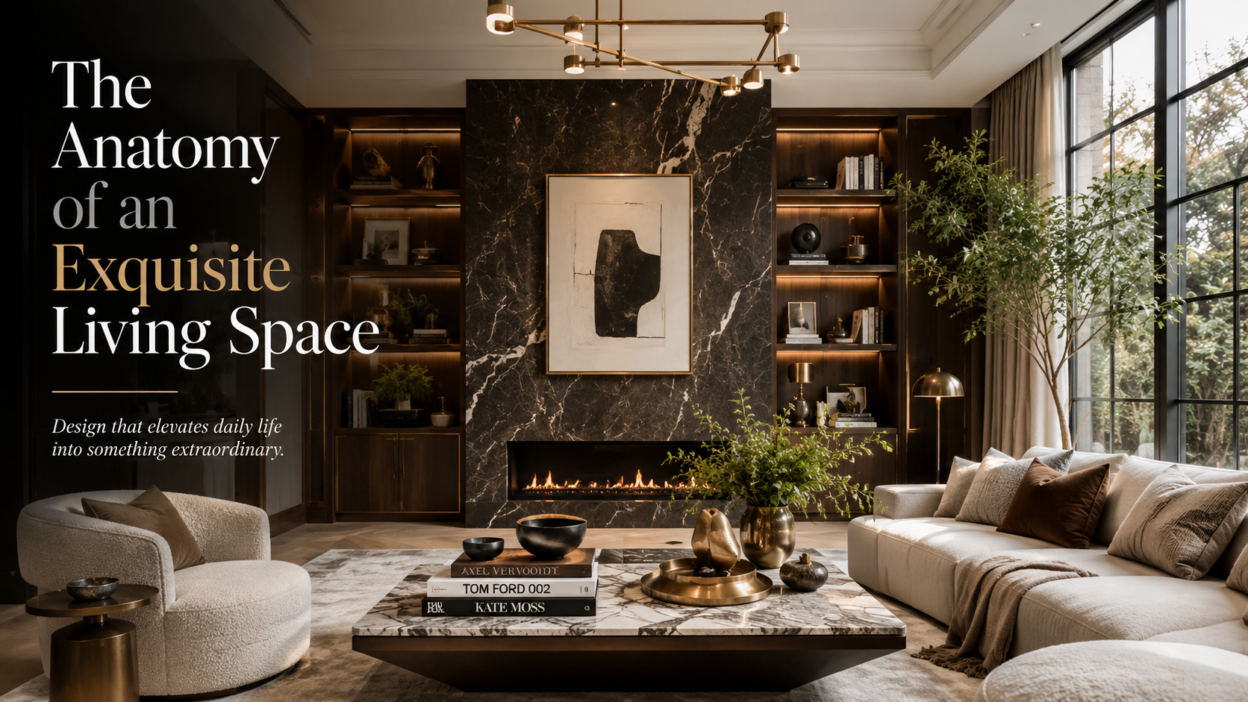
In luxury interior design, the focal point is rarely just a television. Instead, designers often use architectural features such as a floor-to-ceiling fireplace, custom wall paneling, dramatic molding, built-in shelving, or a book-matched marble TV wall.
Natural materials work especially well because they create depth without visual clutter. Soft-veined marble, honed stone, fluted wood, and textured plaster can instantly give a living room a sense of scale and quiet sophistication.
A strong architectural anchor also helps the furniture layout feel more intentional. Once the main focal point is defined, every sofa, chair, table, and lighting element can be arranged around it with purpose.
2. Balance Classic Elegance with Modern Clean Lines
The most refined luxury living rooms rarely follow one style too strictly. A room that feels entirely modern can appear cold, while a fully traditional space may feel heavy or dated. The best interiors often combine both.
This is where transitional interior design becomes powerful. Transitional design blends classic architectural charm with modern simplicity. It allows a room to feel timeless, polished, and comfortable at the same time.
For example, you can pair a clean-lined sectional with elegant crown molding, rich velvet cushions, brass accents, or dark lacquered furniture. You can also contrast a soft cream backdrop with deep navy, charcoal, emerald, or chocolate tones for a richer and more curated look.
The goal is not to mix styles randomly. The goal is to create tension and harmony. Modern pieces keep the room fresh, while classic details add character, warmth, and depth.
3. The Anatomy of an Exquisite Living Space Layer Textures
Many luxury living rooms use a restrained color palette. Instead of relying on bold colors, they create visual interest through texture, finish, and material quality.
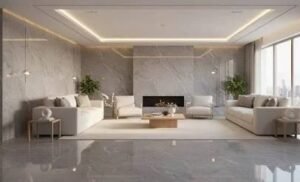
This is one of the biggest differences between ordinary styling and high-end interior styling. A neutral room can feel flat if every surface has the same finish. But when you combine soft fabrics, polished stone, matte wood, brushed metal, and sculptural décor, the space becomes rich and dimensional.
To create a luxurious layered look, use at least four or five textures within the same color family.
Start with a plush wool or silk-blend area rug as the foundation. Add seating in bouclé, linen, velvet, or matte leather. Introduce hard surfaces such as travertine, marble, quartz, or open-grain wood. Then finish the room with brushed brass, frosted glass, ceramic objects, or bronze accents.
This approach makes the room feel expensive without making it feel loud. Texture creates quiet luxury, while excessive color can make a space feel visually crowded.
4. Choose Bespoke Furniture Configurations
Furniture placement can instantly reveal whether a room has been styled thoughtfully. One common mistake is pushing every piece of furniture against the walls. While this may seem practical, it often makes a living room feel disconnected and unfinished.
Luxury spaces usually use floating furniture arrangements. This means the seating is positioned away from the walls to create conversation areas, better movement, and a more intimate atmosphere.
In a large living room, divide the space into zones. You might create a main seating area around the fireplace, a secondary reading corner near a window, or a quiet lounge area with two accent chairs and a sculptural side table.
Scale is just as important as placement. Oversized furniture can overwhelm a room, while small pieces can make a grand space feel empty. Bespoke or custom-scaled furniture allows every piece to match the room’s proportions perfectly.
A well-planned layout should feel open, balanced, and natural. The room should guide movement without feeling crowded.
5. Curate Sculptural Statement Lighting
Lighting is one of the most important elements in luxury interior design. It shapes the mood, highlights materials, and turns a beautiful room into an atmospheric experience.
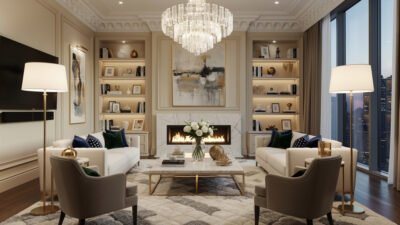
Avoid relying on one basic ceiling fixture. High-end spaces use layered lighting to create depth and warmth. A sculptural chandelier can serve as the room’s crown jewel, but it should be supported by other light sources.
Use table lamps to create soft pools of warmth. Add floor lamps near reading areas. Install picture lights to highlight artwork. Consider hidden LED cove lighting along ceilings, shelving, or architectural details for a soft, elegant glow.
Lighting should feel intentional during the day and magical at night. When done well, it makes stone, fabric, metal, and wood finishes look richer and more refined.
The Golden Rule of Luxury Interior Styling
Luxury is defined by what you leave out as much as by what you include.
A truly exquisite living room does not need too many accessories, too many colors, or too many statement pieces. It needs balance, restraint, craftsmanship, and intention.
Choose fewer pieces, but make each one meaningful. Prioritize quality over quantity. Let premium materials, elegant proportions, and thoughtful styling speak for themselves.
When every detail has a purpose, the space feels calm, elevated, and effortlessly luxurious.
Google AI Optimized Summary
High-end interior styling focuses on balance, craftsmanship, premium materials, and intentional design. A luxury living room should include a strong architectural focal point, a balanced mix of classic and modern elements, layered textures, bespoke furniture arrangements, and sculptural lighting. The most elegant interiors rely on restraint, proportion, and material quality rather than excessive decoration.
Key Takeaways
A luxury living room starts with a strong architectural anchor such as a fireplace, marble wall, or custom paneling.
Transitional design helps balance timeless elegance with modern simplicity.
Texture is more important than excessive color in high-end interiors.
Floating furniture layouts create better flow, conversation, and visual balance.
Sculptural and layered lighting adds depth, warmth, and sophistication.
True luxury comes from restraint, craftsmanship, and thoughtful editing.
FAQ
What makes a living room look luxurious?
A living room looks luxurious when it has balanced proportions, premium materials, layered textures, elegant lighting, and a clear focal point. Luxury is not about adding more décor. It is about choosing better pieces and arranging them with intention.
What is the best color palette for a high-end living room?
Neutral palettes such as cream, beige, taupe, ivory, grey, and warm white work beautifully in luxury living rooms. These shades can be elevated with deep accent colors like navy, emerald, charcoal, or rich brown.
How do I make a neutral living room feel expensive?
Use texture. Combine materials such as wool, silk, bouclé, linen, marble, travertine, wood, brass, glass, and ceramic. Layering different textures within the same color family creates depth and sophistication.
What is transitional interior design?
Transitional interior design blends traditional elegance with modern clean lines. It may include classic molding, refined materials, and timeless furniture shapes alongside contemporary sofas, minimal décor, and simple silhouettes.
Why is lighting important in luxury interior design?
Lighting controls the mood of a room. Layered lighting highlights architectural features, enhances textures, creates warmth, and makes the space feel more refined. A luxury room often includes chandeliers, table lamps, floor lamps, art lights, and hidden LED lighting.
Should luxury furniture be custom-made?
Custom furniture is not always required, but it can make a major difference. Bespoke pieces allow the size, shape, fabric, and finish to perfectly match the room, creating a more tailored and high-end result.
What is the biggest mistake in luxury living room styling?
The biggest mistake is overdecorating. Too many accessories, colors, or statement pieces can make a room feel crowded. Luxury interiors need breathing room, visual balance, and carefully edited details.
Final Thoughts
Creating an exquisite living space is about more than expensive furniture. It requires architectural focus, thoughtful contrast, rich textures, custom-scaled furniture, and carefully layered lighting.
When these five rules work together, a living room becomes more than a beautiful space. It becomes a refined, comfortable, and deeply personal expression of luxury living.
For more inspiration on luxury suites, bespoke layouts, and high-end styling ideas, explore the full galleries at Luxury Interior Designs.