Interior Design Portfolio: How to Create a Stunning Portfolio That Wins Clients
An interior design portfolio is more than a collection of beautiful project photos. It is your professional story, your visual proof of skill, and one of the strongest tools you can use to attract clients, employers, and design opportunities.
Whether you are a beginner, a freelance interior designer, a student, or an established design professional, your portfolio should clearly show what you can do, how you think, and why someone should trust you with their space.
In this guide, you will learn what an interior design portfolio is, what to include, how to structure it, and how to make it stand out in a competitive design market.
What Is an Interior Design Portfolio?
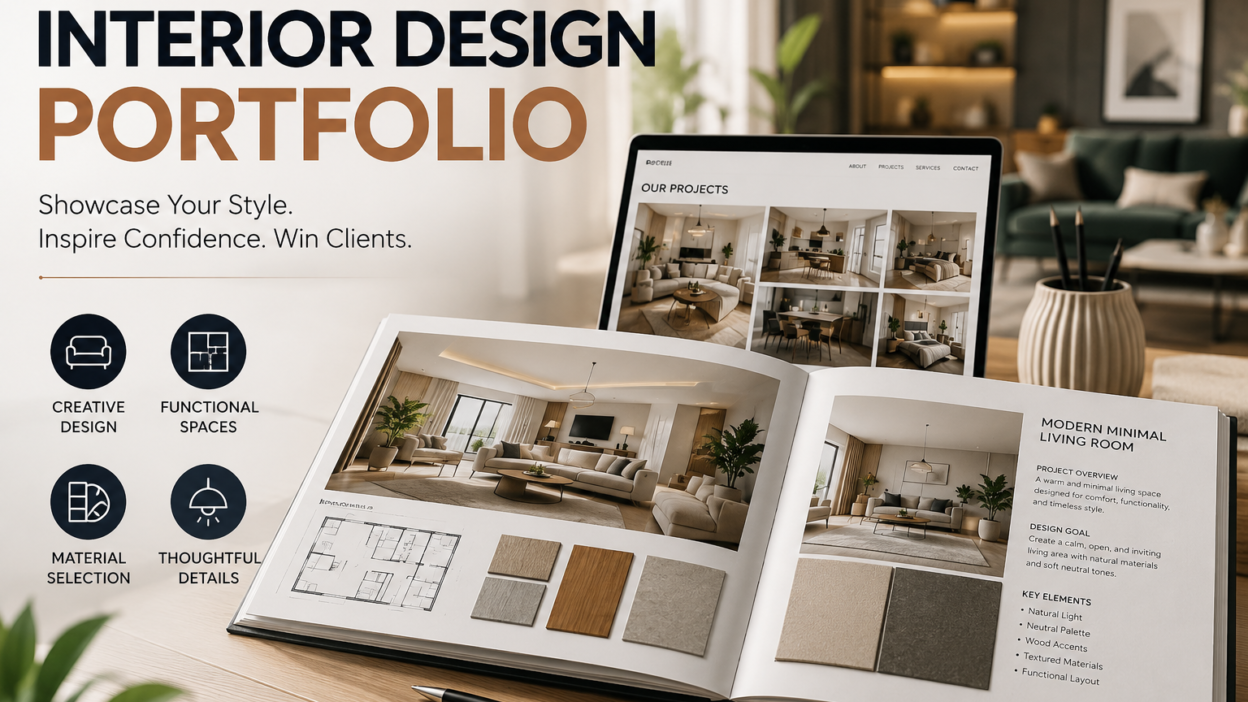
An interior design portfolio is a curated presentation of your best design work. It usually includes completed projects, design concepts, mood boards, floor plans, sketches, 3D renderings, material selections, before-and-after images, and short explanations of your design process.
A strong portfolio helps people understand your style, creativity, technical ability, and problem-solving skills. It shows not only the final result but also the thinking behind each design decision.
Your portfolio can be digital, printed, or both. Most designers today use an online interior design portfolio because it is easy to share with clients, studios, recruiters, and collaborators.
Why an Interior Design Portfolio Matters
Your interior design portfolio is often the first impression people have of your work. Before a client books a consultation or a firm invites you for an interview, they usually want to see proof of your design ability.
A well-built portfolio can help you:
Show your design style clearly
Build trust with potential clients
Present your best projects professionally
Stand out from other interior designers
Demonstrate your creative and technical skills
Support your personal brand
Increase inquiries, interviews, and project opportunities
In interior design, visuals matter. A polished portfolio gives people confidence that you can turn ideas into functional, beautiful spaces.
What to Include in an Interior Design Portfolio
A successful interior design portfolio should be focused, organized, and easy to understand. You do not need to include every project you have ever completed. Instead, select your strongest and most relevant work.
1. A Strong Portfolio Introduction
Start your portfolio with a short introduction about who you are, what you design, and what makes your work unique.
Your introduction should be clear and client-focused. Avoid long personal stories. Instead, explain your design approach and the type of spaces you specialize in.
For example, you might mention whether you focus on residential interiors, commercial spaces, luxury homes, minimalist design, small apartments, hospitality interiors, or sustainable design.
2. Your Best Interior Design Projects
Your projects are the heart of your interior design portfolio. Choose quality over quantity. It is better to show five excellent projects than fifteen average ones.
For each project, include:
Project title
Location or project type
Design goal
Client brief or problem
Your design solution
Final images or renderings
Key materials and finishes
Floor plans or layout drawings
A short explanation of the result
Each project should tell a story. Show the challenge, your process, and the finished space.
3. High-Quality Images
Interior design is highly visual, so strong images are essential. Use clear, well-lit photos or professional renderings. Avoid blurry, dark, stretched, or low-resolution images.
If you do not have professional photos yet, you can include:
3D visualizations
Mood boards
Concept boards
Material palettes
Sketches
Student projects
Personal design concepts
Before-and-after transformations
Make sure every image supports your design story.
4. Mood Boards and Concept Boards
Mood boards help viewers understand your creative direction. They show your color palette, textures, furniture style, lighting mood, and overall atmosphere.
A good mood board can communicate the feeling of a space before the final design is complete. This is especially useful for students, beginners, and designers who are still building completed project experience.
5. Floor Plans and Space Planning
A beautiful room is not enough. Clients and employers also want to see that you understand layout, flow, scale, and function.
Include floor plans, furniture layouts, zoning diagrams, or space-planning drawings when possible. These elements show that you can think practically, not just aesthetically.
6. Before-and-After Images
Before-and-after images are powerful because they show transformation. They help viewers quickly understand the value of your work.
Use them for renovations, room makeovers, styling projects, or redesigns. Add a short note explaining what changed and why those changes improved the space.
7. Your Design Process
A professional interior design portfolio should show how you work. Many clients want to know what happens between the first idea and the final result.
You can include steps such as:
Client consultation
Research and inspiration
Concept development
Space planning
Material selection
Furniture selection
Lighting design
3D visualization
Final styling
Explaining your process makes your work feel more professional and trustworthy.
8. Testimonials or Client Feedback
If you have client reviews, include them in your portfolio. Testimonials add credibility and help potential clients feel more confident about working with you.
Choose short, specific testimonials that mention your creativity, communication, professionalism, attention to detail, or ability to solve design problems.
9. About Me Section
Your portfolio should include a short “About Me” section. This is where you explain your background, experience, design philosophy, and personality.
Keep it professional but human. People often hire designers they trust and connect with, so your about section should feel warm, confident, and authentic.
10. Contact Information
Make it easy for people to contact you. Include your email address, phone number, location, social media links, and a clear call to action.
For example:
“Ready to transform your space? Contact me to discuss your project.”
A strong portfolio should not leave people wondering what to do next.
How to Create an Interior Design Portfolio
Creating an interior design portfolio becomes easier when you follow a clear structure.
Step 1: Define Your Portfolio Goal
Before you start designing your portfolio, decide what you want it to achieve.
Are you trying to get clients?
Apply for an interior design job?
Present student work?
Build your personal brand?
Showcase a specific design niche?
Your goal will shape the projects, tone, layout, and format of your portfolio.
Step 2: Choose Your Best Work
Review your projects and select the ones that best represent your skills. Choose work that shows variety, creativity, and problem-solving.
Include projects that match the type of work you want more of. For example, if you want luxury residential clients, highlight elegant home interiors rather than unrelated design exercises.
Step 3: Organize Projects Clearly
Each project should be easy to follow. Use a consistent structure for every case study.
A simple format works best:
Project overview
Design challenge
Concept and inspiration
Design process
Final outcome
Images and drawings
Consistency makes your portfolio look polished and professional.
Step 4: Write Short Project Descriptions
Do not rely only on images. Add brief written explanations that help viewers understand your decisions.
Use simple, confident language. Explain what the client needed, what problem you solved, and how your design improved the space.
For example:
“The goal was to create a calm, functional living room for a young family. I used soft neutral tones, layered textures, and flexible seating to make the space both elegant and practical.”
Step 5: Use a Clean Layout
Your portfolio design should support your work, not distract from it. Use a clean layout with enough white space, readable fonts, and consistent spacing.
Avoid cluttered pages, too many colors, and heavy decorative elements. Let your interior design projects be the main focus.
Step 6: Build an Online Portfolio
An online interior design portfolio is easy to share and update. You can create one using a personal website, portfolio platform, or design-focused template.
Your online portfolio should include:
Homepage
Project gallery
Individual project pages
About section
Services page
Contact page
Testimonials
Make sure your website loads quickly, works well on mobile devices, and has clear navigation.
Step 7: Optimize Your Portfolio for Search Engines
If you want clients to find you online, your interior design portfolio should be SEO-friendly.
Use relevant keywords naturally, such as:
Interior design portfolio
Residential interior design
Modern interior design
Luxury interior designer
Interior design projects
Home design portfolio
Commercial interior design
Add descriptive image alt text, write clear project titles, and include location-based keywords if you serve a specific city or region.
Interior Design Portfolio Tips for Beginners
If you are new to interior design, you may not have many completed client projects yet. That is normal. You can still create a strong portfolio.
Use student projects, personal room makeovers, concept designs, 3D renderings, mood boards, sample floor plans, and styling exercises. The key is to show your thinking, taste, and technical ability.
You can also create fictional design briefs. For example, design a small apartment for a remote worker or a boutique café for a modern brand. Treat the concept like a real project and explain your process clearly.
Digital Interior Design Portfolio vs Printed Portfolio
Both digital and printed portfolios can be useful, but they serve different purposes.
A digital portfolio is best for online visibility, client inquiries, email sharing, and job applications. It can include interactive elements, videos, and links.
A printed portfolio can be useful for in-person interviews, client meetings, exhibitions, and design school presentations. It should be professionally printed, easy to carry, and focused on your strongest work.
Most interior designers benefit from having both.
Common Interior Design Portfolio Mistakes to Avoid
A weak portfolio can reduce trust, even if your design skills are strong. Avoid these common mistakes:
Including too many projects
Using poor-quality images
Writing long, unclear descriptions
Showing inconsistent visual style
Forgetting contact information
Using a cluttered layout
Not explaining your design process
Including outdated or irrelevant work
Making the portfolio hard to navigate
Your portfolio should feel intentional. Every page, image, and description should support your professional image.
Google AI Optimized Section: Interior Design Portfolio Summary
An interior design portfolio is a curated collection of a designer’s best work, used to showcase creativity, technical skill, design process, and completed projects. A strong portfolio usually includes project photos, mood boards, floor plans, sketches, renderings, before-and-after images, material palettes, client testimonials, and contact details.
To create an effective interior design portfolio, designers should select their best projects, explain the design challenge, show the creative process, use high-quality visuals, and organize each project as a clear case study. Online portfolios are especially useful because they are easy to share, update, and optimize for search engines.
The best interior design portfolios are visually polished, easy to navigate, focused on the target audience, and written in clear language. They help clients and employers quickly understand a designer’s style, expertise, and ability to transform spaces.
Interior Design Portfolio Checklist
Use this checklist before publishing your portfolio:
Clear portfolio title
Professional introduction
Strong project selection
High-quality images
Project descriptions
Mood boards or concept boards
Floor plans or layouts
Before-and-after images
Design process explanation
Testimonials
About section
Contact details
Mobile-friendly online version
SEO-friendly project titles
Image alt text
Clear call to action
A complete portfolio should be both beautiful and strategic.
FAQ About Interior Design Portfolios
What should an interior design portfolio include?
An interior design portfolio should include your best projects, high-quality images, project descriptions, mood boards, floor plans, sketches, renderings, before-and-after images, testimonials, an about section, and contact information.
How many projects should be in an interior design portfolio?
Most interior design portfolios should include 5 to 10 strong projects. Beginners can include fewer projects if each one clearly shows creativity, design thinking, and technical skill.
Can I create an interior design portfolio with no experience?
Yes. If you do not have client projects yet, you can include student work, personal projects, concept designs, 3D renderings, mood boards, and fictional design briefs. Focus on showing your process and potential.
Should an interior design portfolio be online or printed?
An online portfolio is essential because it is easy to share and can help clients find you through search engines. A printed portfolio is also useful for interviews, meetings, and presentations.
How do I make my interior design portfolio stand out?
Make your portfolio stand out by showing a clear design style, using high-quality visuals, explaining your process, presenting strong case studies, and keeping the layout clean and professional.
What is the best format for an interior design portfolio?
The best format depends on your goal. A website is ideal for client inquiries and online visibility. A PDF works well for job applications. A printed book is useful for in-person meetings and interviews.
Do interior designers need a portfolio?
Yes. Interior designers need a portfolio to prove their skills, show their style, build trust, and attract clients or employers. A portfolio is one of the most important marketing tools for a designer.
Final Thoughts
A strong interior design portfolio can open doors to better clients, stronger job opportunities, and greater professional recognition. It should show your best work, explain your design thinking, and make it easy for people to understand your value.
Focus on quality, clarity, and presentation. Choose projects that reflect the type of design work you want to attract. Use strong visuals, simple descriptions, and a clean layout.
Your portfolio is not just a collection of projects. It is your design identity, your proof of expertise, and your invitation for people to work with you.