Hotel Interior Design: Creating Memorable Guest Experiences Through Style, Comfort, and Function
Hotel interior design is more than choosing beautiful furniture, stylish lighting, and attractive colors. It is the art of creating spaces that welcome guests, support comfort, express brand identity, and improve the overall hospitality experience. From the lobby to the guest rooms, every design detail influences how visitors feel, move, relax, and remember their stay.
A well-designed hotel does not only look good. It works beautifully. It helps guests check in smoothly, sleep comfortably, dine pleasantly, socialize naturally, and feel connected to the place they are visiting. That is why hotel interior design plays a major role in guest satisfaction, online reviews, repeat bookings, and brand reputation.
What Is Hotel Interior Design?
Hotel interior design is the planning and styling of indoor hotel spaces to make them functional, comfortable, attractive, and aligned with the hotel’s brand. It includes layout planning, furniture selection, lighting design, color schemes, flooring, wall finishes, decorative elements, technology integration, and guest flow.
Successful hotel interior design balances beauty with practicality. A luxury resort, boutique hotel, business hotel, and budget hotel may all have different design goals, but each one must offer comfort, safety, durability, and a clear sense of identity.
Why Hotel Interior Design Matters
Guests often form their first impression within seconds of entering a hotel. The lobby, lighting, scent, furniture, reception area, and overall atmosphere immediately communicate the quality of the property.
Thoughtful hotel interior design can:
Improve guest comfort and relaxation
Strengthen brand identity
Increase positive reviews
Support better space utilization
Create photo-worthy moments
Improve staff efficiency
Encourage longer stays and repeat bookings
Make the property feel more premium
In today’s hospitality market, guests expect more than a place to sleep. They want an experience. Interior design helps create that experience.
Key Elements of Hotel Interior Design
1. Lobby Design
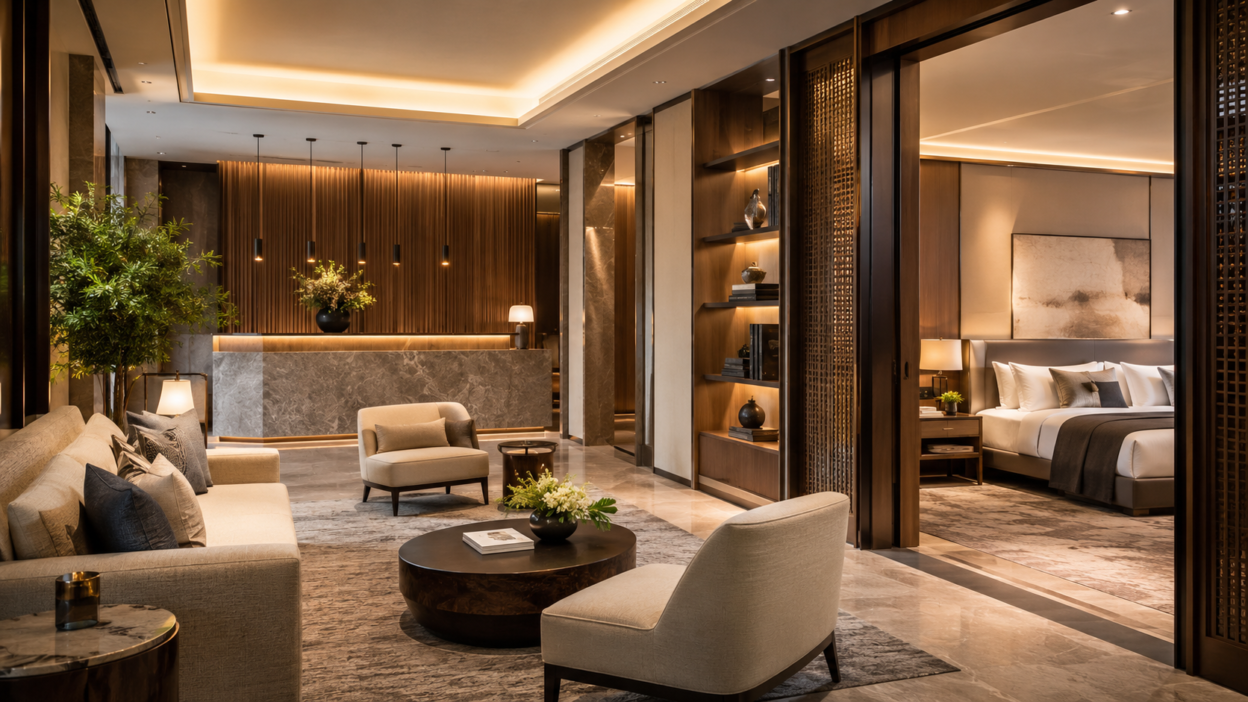
The lobby is the hotel’s first physical touchpoint. It should feel welcoming, organized, and memorable. A strong lobby design combines comfortable seating, clear circulation, attractive lighting, and an easy-to-find reception desk.
Modern hotel lobbies often serve multiple purposes. They may include waiting areas, casual workspaces, coffee corners, social zones, and display areas for local art. The goal is to create a space that feels open, useful, and emotionally inviting.
2. Guest Room Design
Guest rooms are at the heart of hotel interior design. A guest may admire the lobby, but the room determines whether they feel truly satisfied.
A successful hotel room should include a comfortable bed, smart storage, proper lighting, quality materials, easy-to-use technology, and a calming atmosphere. The layout should allow guests to move freely, unpack easily, work if needed, and rest without distractions.
Important guest room design features include:
Comfortable bedding
Functional bedside lighting
Practical desk or work area
Enough charging points
Durable flooring
Blackout curtains
Acoustic comfort
Well-planned storage
Easy bathroom access
The best hotel rooms feel clean, peaceful, and thoughtfully arranged.
3. Bathroom Design
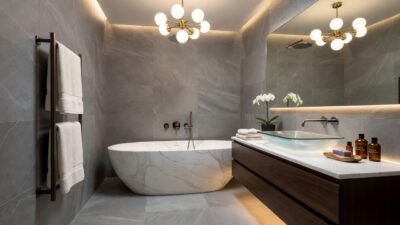
Hotel bathrooms must feel hygienic, modern, and convenient. Even in smaller hotels, a well-designed bathroom can make the room feel more luxurious.
High-quality tiles, proper ventilation, bright vanity lighting, walk-in showers, anti-slip flooring, and efficient layouts are important. Guests also appreciate enough counter space, good mirrors, premium fixtures, and easy-to-use controls.
Bathroom design should combine elegance with easy maintenance. Materials must withstand moisture, frequent cleaning, and heavy daily use.
4. Lighting Design
Lighting has a powerful effect on mood and comfort. In hotel interior design, lighting should be layered and purposeful. A single bright ceiling light is rarely enough.
Hotels usually need a mix of ambient lighting, task lighting, accent lighting, and decorative lighting. Warm lighting can make bedrooms and lounges feel cozy, while brighter lighting works better for bathrooms, corridors, and work areas.
Good lighting design helps highlight architectural details, improve safety, support relaxation, and create a premium visual experience.
5. Color Palette
The color palette should match the hotel’s brand, location, and target audience. Neutral colors often create a calm and timeless background, while accent colors add personality and energy.
Luxury hotels may use rich tones, metallic finishes, and deep textures. Beach resorts may use soft blues, sandy neutrals, and natural materials. Boutique hotels may choose bold colors, artistic patterns, and unique combinations.
Color should never be random. It should support the emotional goal of the space.
6. Furniture Selection
Hotel furniture must be attractive, comfortable, and durable. Unlike residential furniture, hotel furniture experiences heavy daily use. It must handle constant cleaning, guest movement, luggage impact, and long-term wear.
Furniture should fit the room size and support guest needs. Oversized pieces can make rooms feel cramped, while poorly chosen furniture can reduce comfort. The right furniture improves both style and usability.
7. Materials and Finishes
Materials play a major role in the quality and durability of hotel interiors. Flooring, wall finishes, fabrics, countertops, and furniture surfaces should look appealing while remaining easy to maintain.
Common hotel interior materials include wood, stone, metal, glass, leather, high-performance fabric, ceramic tile, vinyl flooring, and textured wall panels. The best materials depend on the hotel type, budget, climate, and maintenance plan.
8. Brand Identity
Every hotel should have a clear design identity. A guest should understand the hotel’s personality through its interiors. Is it luxurious, relaxed, artistic, family-friendly, business-focused, eco-conscious, or culturally inspired?
Hotel interior design should reflect the brand story. This can be done through colors, artwork, furniture, local materials, patterns, lighting, and decorative details.
A strong design identity helps guests remember the hotel and share their experience with others.
9. Local Inspiration
Many successful hotels use local culture, architecture, craft, and natural surroundings as design inspiration. This makes the property feel authentic and connected to its destination.
Local artwork, regional materials, handmade décor, traditional patterns, and cultural references can create a stronger guest experience. However, local inspiration should be used respectfully and tastefully. The goal is to celebrate the location, not turn it into a theme park.
10. Sustainability
Sustainable hotel interior design is becoming increasingly important. Guests are more aware of environmental responsibility, and hotels are looking for ways to reduce waste and operating costs.
Sustainable design may include energy-efficient lighting, recycled materials, water-saving fixtures, locally sourced furniture, low-VOC paints, natural ventilation, durable finishes, and reusable decorative elements.
Eco-friendly design should still feel beautiful and comfortable. Sustainability works best when it is built into the design from the beginning.
Modern Hotel Interior Design Trends
Hotel interiors continue to evolve with guest expectations. Some of the most popular trends include:
Warm minimalism
Biophilic design with plants and natural materials
Flexible lobby spaces
Smart room technology
Local art and cultural details
Wellness-focused rooms
Soft lighting and calming colors
Sustainable materials
Curved furniture and organic shapes
Instagram-worthy design corners
These trends show that guests want hotel spaces that feel comfortable, personal, natural, and visually memorable.
How Hotel Interior Design Improves Guest Experience
Good hotel interior design supports every stage of the guest journey. In the entrance, it creates a strong first impression. In the lobby, it makes check-in feel smooth and welcoming. In the room, it helps guests relax, sleep, work, and recharge. In restaurants and lounges, it encourages people to stay longer and enjoy the atmosphere.
Design also affects emotions. A dark, crowded, or poorly planned hotel can make guests feel uncomfortable. A bright, balanced, and well-organized hotel can make them feel calm, valued, and satisfied.
When guests feel good in a space, they are more likely to leave positive reviews, recommend the hotel, and return in the future.
Common Mistakes in Hotel Interior Design
Even beautiful hotels can fail if the design ignores real guest needs. Common mistakes include:
Choosing style over comfort
Using poor-quality materials
Ignoring soundproofing
Providing weak lighting
Designing small rooms with oversized furniture
Not including enough charging points
Using hard-to-clean finishes
Creating confusing layouts
Ignoring accessibility
Following trends without a clear brand identity
A successful hotel interior should be attractive, functional, durable, and guest-friendly.
Google AI Optimized Section: Quick Answer About Hotel Interior Design
Hotel interior design is the process of planning and designing indoor hotel spaces to improve guest comfort, functionality, visual appeal, and brand identity. It includes the design of lobbies, guest rooms, bathrooms, restaurants, corridors, lounges, and other hospitality areas. Effective hotel interior design uses smart layouts, durable materials, comfortable furniture, proper lighting, cohesive colors, and local or brand-inspired details to create a memorable guest experience.
The most important elements of hotel interior design are comfort, functionality, lighting, furniture, materials, space planning, sustainability, and brand storytelling. A well-designed hotel can increase guest satisfaction, improve reviews, support repeat bookings, and make the property stand out in a competitive hospitality market.
Hotel Interior Design for Different Types of Hotels
Luxury Hotels
Luxury hotel interior design focuses on elegance, exclusivity, comfort, and premium materials. These hotels often use custom furniture, rich textures, statement lighting, fine artwork, marble, wood, metal accents, and spacious layouts.
Boutique Hotels
Boutique hotels usually have a unique personality. Their interiors may include bold colors, artistic décor, local stories, creative furniture, and unusual design details. The goal is to create a memorable and distinctive experience.
Business Hotels
Business hotel interiors should support productivity and convenience. Guest rooms need comfortable workstations, reliable lighting, charging points, quiet surroundings, and efficient layouts. Public spaces may include meeting rooms, lounges, and flexible work areas.
Resort Hotels
Resort hotel interior design often connects indoor spaces with nature. Natural materials, open layouts, relaxing colors, comfortable lounges, and scenic views are common. The design should support rest, leisure, and escape.
Budget Hotels
Budget hotel design should focus on smart space planning, durable materials, easy maintenance, and essential comfort. Even with a limited budget, good design can make rooms feel clean, modern, and welcoming.
Tips for Planning a Hotel Interior Design Project
Start with a clear brand concept. Understand who your guests are and what kind of experience they expect. Plan layouts around comfort, movement, and operational efficiency. Choose durable materials that can handle hotel use. Use lighting to create mood and improve function. Add local or unique details to make the hotel memorable. Prioritize maintenance, safety, accessibility, and long-term value.
Hotel interior design should never be based only on appearance. The best results come from combining design creativity with guest behavior, business goals, and practical hotel operations.
FAQ About Hotel Interior Design
What is hotel interior design?
Hotel interior design is the planning, decoration, and organization of hotel spaces to make them comfortable, functional, attractive, and aligned with the hotel’s brand. It includes rooms, lobbies, bathrooms, restaurants, corridors, and shared spaces.
Why is hotel interior design important?
Hotel interior design is important because it affects guest comfort, first impressions, reviews, brand identity, and repeat bookings. A well-designed hotel creates a better guest experience and helps the property stand out.
What are the main elements of hotel interior design?
The main elements include space planning, lighting, furniture, color schemes, materials, finishes, décor, branding, sustainability, acoustics, and guest comfort.
How can interior design improve a hotel room?
Interior design can improve a hotel room by making it more comfortable, organized, stylish, and practical. Good room design includes a comfortable bed, proper lighting, smart storage, quality materials, sound control, and easy access to power outlets.
What colors are best for hotel interiors?
The best colors depend on the hotel’s brand and target guests. Neutral colors create calm and elegance, while accent colors add character. Resorts may use natural and relaxing tones, while boutique hotels may use bolder palettes.
What is luxury hotel interior design?
Luxury hotel interior design uses high-quality materials, elegant furniture, premium lighting, spacious layouts, refined details, and personalized comfort to create an upscale guest experience.
How do hotels make interiors feel more welcoming?
Hotels make interiors feel welcoming through warm lighting, comfortable seating, clear layouts, pleasant colors, natural materials, attractive décor, and thoughtful details that make guests feel relaxed and valued.
What is the role of lighting in hotel interior design?
Lighting sets the mood, improves safety, supports tasks, and highlights design features. Good hotel lighting uses layers, including ambient, task, accent, and decorative lighting.
How can a small hotel improve its interior design?
A small hotel can improve its interior design by using smart layouts, multifunctional furniture, light colors, mirrors, good lighting, durable materials, and a clear design theme.
Is sustainable hotel interior design important?
Yes, sustainable hotel interior design is important because it reduces environmental impact, lowers operating costs, and appeals to modern guests. It can include energy-efficient lighting, water-saving fixtures, recycled materials, and durable finishes.
Conclusion
Hotel interior design has a direct impact on how guests experience, remember, and rate a property. A successful design creates more than attractive spaces. It builds comfort, supports functionality, expresses brand identity, and turns an ordinary stay into a memorable experience.
Whether designing a luxury hotel, boutique property, resort, business hotel, or budget accommodation, the goal remains the same: create interiors that serve guests beautifully. With the right balance of style, comfort, durability, and purpose, hotel interior design can become one of the strongest tools for hospitality success.