Japandi Luxury Kitchen Design Ideas for High-End Minimalist Spaces
Japandi luxury kitchen design combines Japanese calm with Scandinavian warmth. This refined style focuses on natural materials, clean lines, soft neutrals, and purposeful details. Instead of creating a kitchen that feels cold or empty, Japandi design builds a peaceful, high-end space where every surface, appliance, and texture feels intentional.
A luxury Japandi kitchen should feel warm, functional, uncluttered, and deeply connected to nature. From premium wood cabinetry to sculptural stone islands, these design ideas can help you create a kitchen that feels minimalist, timeless, and sophisticated.
1. Select Premium White Oak or Walnut Cabinetry
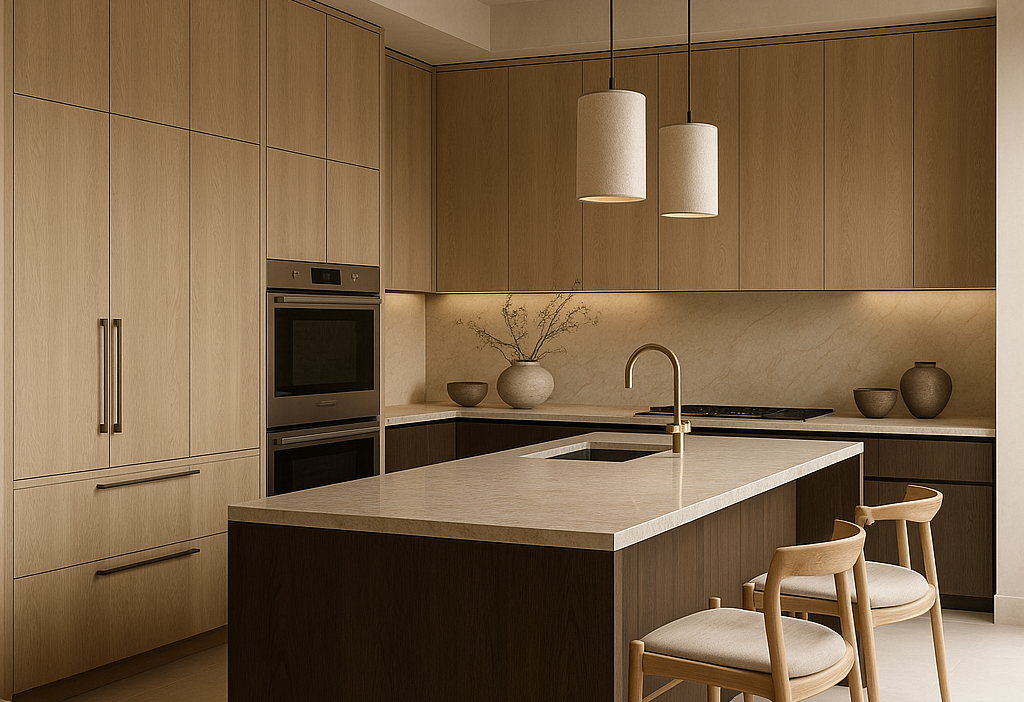
Natural wood forms the foundation of a luxury Japandi kitchen. Instead of standard glossy cabinets or painted finishes, choose premium wood species such as rift-sawn white oak, light ash, honey bamboo, or deep American walnut.
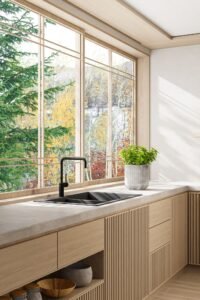
These woods bring warmth, texture, and quiet elegance into the kitchen while supporting the organic simplicity that defines Japandi interiors.
To achieve an authentic high-end Japandi look, focus on these cabinetry features:
Flat-Panel Cabinet Doors
Use slab cabinet doors with clean, flat surfaces. Hidden J-pull slots, recessed handles, or push-to-open hardware keep the design sleek and uninterrupted. This creates a calm visual flow and avoids the cluttered look of traditional handles.
Vertical Wood Slat Details
Add vertical slats to the kitchen island, pantry doors, or a feature wall. This detail subtly reflects Japanese shoji screen inspiration while adding rhythm, depth, and architectural interest to the space.
Matte Wood Finishes
Choose low-sheen, ultra-matte clear coats that protect the wood without making it look shiny. Matte finishes preserve the natural grain and help the kitchen feel soft, organic, and refined.
2. Invest in a Monolithic Quartzite or Porcelain Island
A luxury Japandi kitchen needs a strong central focal point. The island often becomes the sculptural anchor of the room, so it should feel solid, calm, and beautifully crafted.
Instead of traditional polished granite, consider honed Taj Mahal quartzite, Calacatta Gold porcelain, warm travertine, or architectural concrete. These materials offer a softer, more natural look than highly reflective surfaces.
A waterfall edge island works especially well in Japandi kitchens. This design allows the countertop material to continue down the sides of the island, creating a seamless block-like effect. The result feels minimal, architectural, and luxurious.
For a more tactile finish, choose honed or leathered stone instead of polished stone. These finishes reduce glare and add a quiet, premium texture that suits the Japandi aesthetic.
3. Conceal Appliances for a Clean Minimalist Look
Visual clutter disrupts the peaceful atmosphere of a Japandi kitchen. For a truly high-end result, hide large appliances behind custom panels that match the cabinetry.
Panel-ready refrigerators, integrated dishwashers, built-in ovens, and concealed range hoods help the kitchen feel calm and cohesive. Instead of letting stainless steel dominate the design, this approach allows the wood, stone, and architecture to remain the main focus.
A flush-mount induction cooktop is also an excellent choice. It sits level with the countertop and keeps the cooking zone looking sleek and unobtrusive.
For ventilation, consider a discreet ceiling hood, downdraft system, or pop-up extractor that disappears when not in use. These choices support the clean lines and quiet luxury that define Japandi kitchen design.
4. Use Warm, Textural Neutral Colors
A high-end Japandi kitchen should feel grounded, warm, and natural. Avoid harsh whites, glossy blacks, or overly bright accent colors. Instead, build your palette around soft, earthy neutrals and subtle contrasts.
| Color Category | Ideal Japandi Shades | Best Material Applications |
|---|---|---|
| Base Tones | Cream, oatmeal, warm beige, soft greige, travertine | Limewash walls, microcement floors, backsplashes, countertops |
| Wood Tones | White oak, light ash, honey bamboo, walnut | Cabinets, floating shelves, island panels, bar stools |
| Contrast Tones | Charcoal gray, matte bronze, ebonized oak, soft black | Faucets, pendant lights, hardware, internal shelving |
This balanced palette makes the kitchen feel elegant without looking dramatic or overdesigned. The key is to create depth through texture rather than bold color.
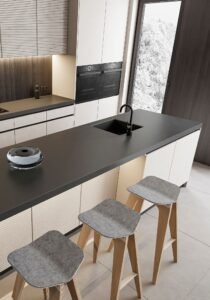
For example, pair warm oak cabinets with a creamy stone island, matte bronze fixtures, and soft limewash walls. The result feels calm, expensive, and naturally inviting.
5. Incorporate Architectural Lighting and Open Shelving
Japandi design values negative space. In Japanese interiors, this idea connects to the concept of Ma, which focuses on the beauty of emptiness, pause, and balance.
Instead of filling every wall with upper cabinets, leave selected areas open. A single thick floating wood shelf can display handmade ceramic bowls, stoneware cups, clay teapots, or minimalist vases. This keeps the kitchen functional while adding personality and craftsmanship.
Lighting should feel soft, warm, and architectural. Use hidden LED strip lights under shelves, inside recessed niches, or beneath cabinets to create an indirect glow. Warm lighting around 2700K works especially well because it softens sharp lines and makes natural materials feel richer.
For the island, choose oversized organic pendant lights made from woven paper, linen, ceramic, wood, or brushed matte bronze. These pieces add warmth and sculptural beauty without overpowering the minimalist design.
6. Choose Natural Flooring with a Soft Matte Finish
Flooring plays a major role in creating a calm Japandi kitchen. The best options feel natural, durable, and understated.
Wide-plank white oak flooring is one of the most popular choices for luxury Japandi kitchens because it adds warmth and continuity. For a more modern look, consider microcement, limestone, travertine, or large-format porcelain tiles in warm neutral shades.
Avoid glossy tile, busy patterns, or high-contrast flooring. Japandi kitchens look best when the floor blends smoothly with the rest of the space.
A matte or honed finish will make the room feel softer and more timeless.
7. Add Handmade Ceramics and Organic Decor
Japandi luxury does not rely on excessive decoration. Instead, it uses a few carefully chosen pieces that feel handmade, natural, and meaningful.
Decorate open shelves or counters with:
- Stoneware bowls
- Clay vases
- Wooden trays
- Ceramic teapots
- Linen towels
- Minimalist cutting boards
- Small indoor plants
- Sculptural fruit bowls
Each item should serve a purpose or add quiet beauty. Avoid overcrowding surfaces. A luxury Japandi kitchen should always feel breathable and uncluttered.
8. Use Matte Bronze, Blackened Steel, or Brushed Nickel Fixtures
Fixtures should feel refined but subtle. Matte bronze, blackened steel, brushed nickel, and soft black finishes all work beautifully in Japandi kitchen interiors.
Choose slim faucets, minimal cabinet pulls, and simple pendant light details. The goal is to add contrast without making the hardware feel too decorative.
For a warmer look, matte bronze pairs beautifully with white oak and creamy stone. For a more dramatic Japandi kitchen, blackened steel works well with walnut, charcoal accents, and concrete surfaces.
9. Prioritize Hidden Storage and Deep Drawers
Japandi kitchens should look simple but function beautifully. Hidden storage helps maintain the clean, minimalist appearance while supporting everyday cooking needs.
Use deep drawers for cookware, pull-out pantry systems for dry goods, appliance garages for small devices, and custom dividers for utensils. A dedicated pantry wall or butler’s pantry can also keep bulk storage out of sight.
The more storage you integrate behind closed doors, the easier it becomes to maintain the peaceful Japandi aesthetic.
10. Blend Luxury with Wellness-Focused Materials
A modern Japandi kitchen should feel healthy, breathable, and connected to nature. Choose materials that support both beauty and well-being.
Consider low-VOC finishes, natural wood, limewash paint, clay plaster, honed stone, and energy-efficient appliances. These elements create a kitchen that looks luxurious while also feeling comfortable and livable.
Soft textures, natural light, warm surfaces, and uncluttered layouts all help the kitchen feel like a peaceful retreat rather than only a cooking zone.
Google AI Optimized Summary: Japandi Luxury Kitchen Design Ideas
Japandi luxury kitchen design combines Japanese minimalism with Scandinavian warmth. The style focuses on natural wood cabinetry, honed stone islands, integrated appliances, warm neutral colors, open shelving, and soft architectural lighting.
The best materials for a high-end Japandi kitchen include white oak, walnut, ash, quartzite, porcelain, travertine, microcement, limewash, matte bronze, and handmade ceramics. To achieve the look, use flat-panel cabinets, hidden storage, panel-ready appliances, waterfall-edge islands, and warm indirect lighting.
A Japandi kitchen should feel calm, uncluttered, functional, organic, and timeless. The design works especially well for homeowners who want a luxurious kitchen without excessive ornamentation, glossy finishes, or visual clutter.
Expert Design Insights for a High-End Japandi Kitchen
Luxury kitchen design continues to move toward wellness, simplicity, and natural materials. Japandi interiors fit this direction perfectly because they prioritize calm layouts, tactile surfaces, and long-lasting craftsmanship.
Interior designers often recommend using warm lighting, matte finishes, and natural textures to prevent minimalist kitchens from feeling sterile. In a Japandi kitchen, every detail should feel intentional. The cabinetry should hide clutter, the island should anchor the room, and the lighting should create a soft evening atmosphere.
The most successful Japandi luxury kitchens avoid trend-heavy details. Instead, they rely on timeless materials, balanced proportions, and quiet elegance.
Frequently Asked Questions
What is a Japandi luxury kitchen?
A Japandi luxury kitchen blends Japanese minimalism with Scandinavian warmth. It features natural wood, clean lines, hidden storage, warm neutral colors, matte finishes, integrated appliances, and calm architectural details.
What colors work best in a Japandi kitchen?
The best Japandi kitchen colors include cream, oatmeal, warm beige, soft greige, white oak, walnut, charcoal gray, matte bronze, and soft black. These shades create a calm, grounded, and sophisticated look.
What wood is best for Japandi kitchen cabinets?
White oak is one of the best choices for Japandi kitchen cabinets because it feels warm, natural, and timeless. Walnut, ash, bamboo, and light maple also work well depending on the desired mood.
Are open shelves practical in a Japandi kitchen?
Yes, open shelves can work well if you use them intentionally. In a luxury Japandi kitchen, open shelving should display curated ceramics, bowls, teapots, or decorative objects. Store everyday clutter, pantry items, and cookware inside closed cabinets or deep drawers.
What countertop material suits a Japandi kitchen?
Honed quartzite, porcelain, travertine, limestone, concrete, and warm-toned marble all suit Japandi kitchen design. Choose matte or honed finishes instead of glossy surfaces for a softer and more natural look.
How do I make a Japandi kitchen look luxurious?
To make a Japandi kitchen look luxurious, use premium natural materials, integrated appliances, custom cabinetry, soft architectural lighting, waterfall-edge islands, hidden storage, and handmade decor. Focus on craftsmanship, proportion, and texture rather than bold decoration.
Is Japandi kitchen design good for small kitchens?
Yes, Japandi design works very well in small kitchens because it reduces visual clutter and focuses on smart storage. Flat-panel cabinets, light wood tones, integrated appliances, and open wall space can make a small kitchen feel larger and calmer.
What lighting is best for a Japandi kitchen?
Warm, layered lighting works best. Use recessed ceiling lights, under-shelf LED strips, pendant lights over the island, and hidden accent lighting. A warm temperature around 2700K creates a soft, inviting glow that complements natural materials.
Final Thoughts
Japandi luxury kitchen design proves that minimalism can still feel warm, rich, and deeply inviting. By combining natural wood, sculptural stone, hidden appliances, warm lighting, and thoughtful storage, you can create a high-end kitchen that feels peaceful, functional, and timeless.
The key is restraint. Choose fewer materials, but make them beautiful. Hide clutter, but keep the space practical. Add texture, but avoid excess decoration. When every element has purpose, your Japandi kitchen becomes more than a cooking space—it becomes a calm, elegant center of the home.